
Cardiology & Vascular Conditions

Cardiology & Vascular Conditions
Why This Matters:
Cardiology and vascular conditions often represent ongoing patient complexity, long-term medication management, surveillance, and risk for complications. Clear current-year documentation helps distinguish active disease from history, prophylaxis, or resolved events.
Provider Documentation Reminders:
When cardiovascular or vascular conditions remain active or clinically relevant, address them at least annually and connect them to the care being provided. The clearest documentation shows current status, type or acuity, relevant complications, medication management, symptom review, monitoring, and follow-up.
DOCUMENT THIS
- Current status: Active, chronic, stable, acute, acute on chronic, resolved, history of, no recurrence.
- Specificity: Heart failure type/acuity, atrial fibrillation type, angina status, vascular location, thrombosis/embolism status.
- Clinical management: Medication management, anticoagulation purpose, symptom review, imaging/labs, cardiology follow-up, risk counseling.
COMMON THINGS MISSED
- Active vs history unclear: Prior MI, PE, DVT, CVA, or vascular event documented without clear current status.
- Medication used as proxy: Anticoagulant or cardiac medication present, but the related condition is not assessed.
- Missing specificity: Heart failure, atrial fibrillation, atherosclerosis, or vascular disease documented without type, acuity, or site when known.
DOCUMENTATION FRAMEWORK
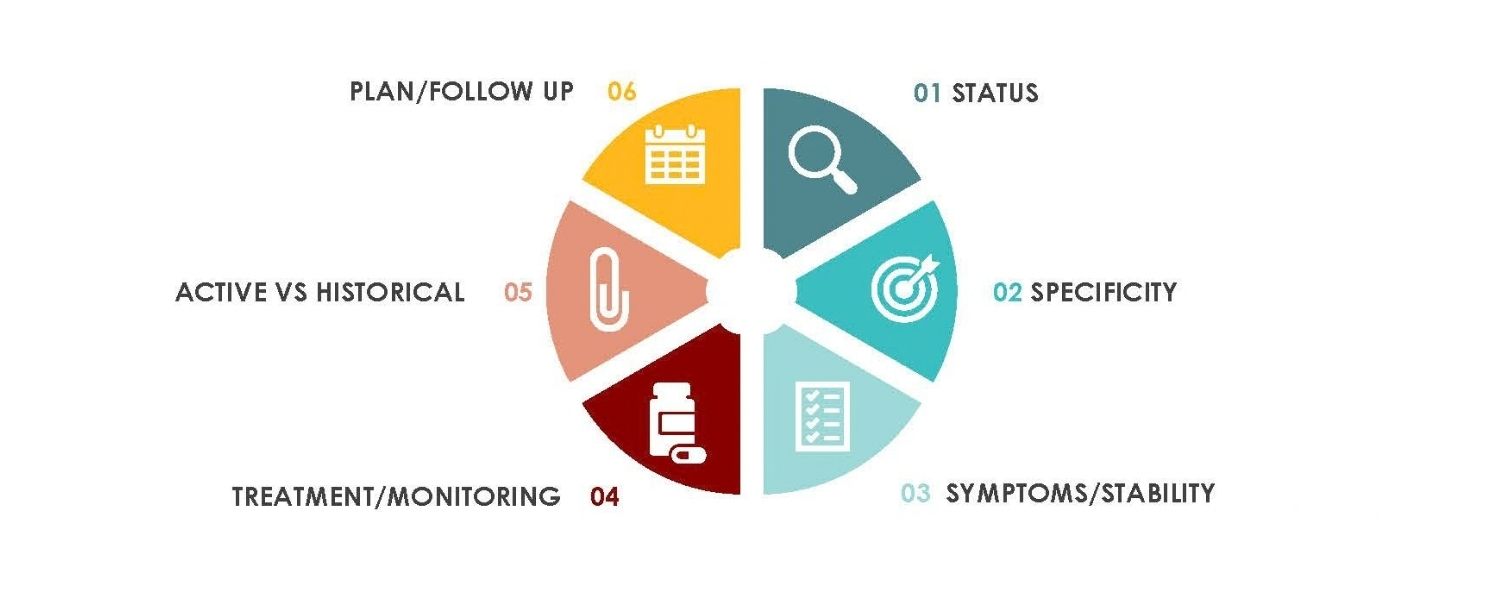
PUTTING THE FRAMEWORK INTO PRACTICE
- STATUS: Document whether the condition is active stable, worsening, resolved, or historical.
Weak: CHF.
Stronger: Chronic systolic heart failure, stable today; no edema or worsening dyspnea.
- SPECIFICITY: Include type, stage, severity, acuity, complications, and related conditions when known.
Weak: Atrial fibrillation.
Stronger: Paroxysmal atrial fibrillation, rate controlled on metoprolol.
- SYMPTOMS/STABILITY: Document relevant symptoms, exam findings, and evidence of current control or progression.
Weak: CAD.
Stronger: Coronary artery disease without current angina; patient denies chest pain today.
- TREATMENT/MONITORING: Document medications, labs, reviewed imaging, referrals, surveillance, symptom review, or continued management.
Weak: On Eliquis.
Stronger: Long-term anticoagulation with Eliquis for paroxysmal atrial fibrillation; no bleeding concerns reported.
- ACTIVE VS HISTORICAL: Clearly distinguish active disease from prior events and document the reason for ongoing treatment.
Weak: History of PE on Xarelto.
Stronger: History of pulmonary embolism without current recurrence; continues Xarelto for secondary prevention.
- PLAN/FOLLOW UP: Include continued treatment, monitoring, return precautions, referrals, or follow-up timing.
Weak: Continue meds.
Stronger: Peripheral vascular disease, stable; continue statin and walking program, follow up with vascular surgery as scheduled.
KEY TAKEAWAY
The strongest cardiovascular documentation clearly distinguishes active disease, residual effects, and history while showing the monitoring or treatment being provided today.